


This article was written in Vietnamese by Vincente Nguyen and published in Luat Khoa Magazine on January 18, 2022. Lee Nguyen did the translation.
The VinFuture Prize is an award given to individuals who do breakthrough scientific research or produce technological innovations that lead to humanitarian outcomes.
This year’s ceremony took place from January 18 to 21 and was praised with flattering words from the international scientific community. [1]
At the same time, Pham Nhat Vuong, chairman of the Vingroup and by extension, the man behind the VinFuture Prize, reappeared in the press after years of absence to talk about his ambition to “leave behind a legacy for life” through programs funded by his colossal capital. [2]
Researchers have a particular term for the actions taken by Vingroup’s boss, in which he uses money in his bid to solve social problems. They call it plutocratic philanthropy.

What is a Plutocracy?
“Nhà tài phiệt” (plutocrat) and “chế độ tài phiệt” (plutocracy) are not unfamiliar terms in the Vietnamese language.
However, there is still no unified interpretation of this term from a political perspective.

“Plutocracy” is a word of Greek origin, which combines “wealth” (πλοῦτος, Ploutos) and “power” (κράτος, Kratos). The combination of these two words evokes a state model where the elite classes, who hoard vast amounts of money and also control the means of production, dominate society.
The elites, in general, tend to hold vast amounts of power and influence in any given societal model. And yet, how much manipulation in politics by the elites is needed for a community to be called a plutocracy?
Some argue that direct and regular participation or intervention in the state by capitalists is a clear demonstration of a plutocracy.
In this view, Trump’s candidacy and his term as the president of the United States, or the fact that billionaires like Michael Bloomberg and Tom Steyer were actively engaged in running for the U.S. presidency in the past, reveals part of the character of plutocratic politics. [3]
However, the very nature of plutocracy has far deeper roots and is more complex than businessmen running for public office.
In the “Economic Inequality and Political Representation” chapter of “Unequal Democracy,” [4] Professor Larry Bartels surveyed the policy priorities of three income groups in the United States: low, medium, and high. He then compared the preferences and policy wishes of these three income groups with the voting tendencies of the elected representatives of the United States Congress in the 1990s and 2010s.
The result Bartels gleaned in his study was that the policy-making of the U.S. legislature tended to lean closer to the priorities of the high-income group.
Thus, a plutocracy does not necessarily need to have the rich seated in the most powerful positions of a state. They can assert power and influence through using economic resources to govern the media, funding policy research institutions, supporting interest groups of their choice, and promoting their political discourses and priorities – all of which are behaviors that can underpin plutocratic politics.
In addition, it is also impossible to talk about plutocratic politics without mentioning the Korean-style chaebol.
In this system, oligarchs overwhelm the institutions of finance, infrastructure, import and export platforms, labor relations, and production in the economy. Thus, although the Korean process of democratization and the Korean democratic system is not really bad, the dependence of the Korean economy on the power of the plutocratic groups also leads to many problems regarding social architecture.
The Plutocracy in Vietnam and the Myth of “Plutocratic Philanthropy”
With the above definition, the question arises as to whether plutocratic politics exists in Vietnam.
The answer is both yes and no.
No, because the nature of Vietnam’s economy remains heavily dependent on the blessings of the state.
In this article on crony capitalism, we affirmed that most Vietnamese capitalists and enterprises could barely escape the golden cage of government if they wanted to reach a certain level of capital accumulation. [5]
This is very different from the history and genesis of plutocracies where economic freedom and equality led to wealth accumulation and the natural formation of a group of capitalists, which then sought to intervene in the political system and manipulate state institutions.
However, the answer to the above-question can also be a yes.
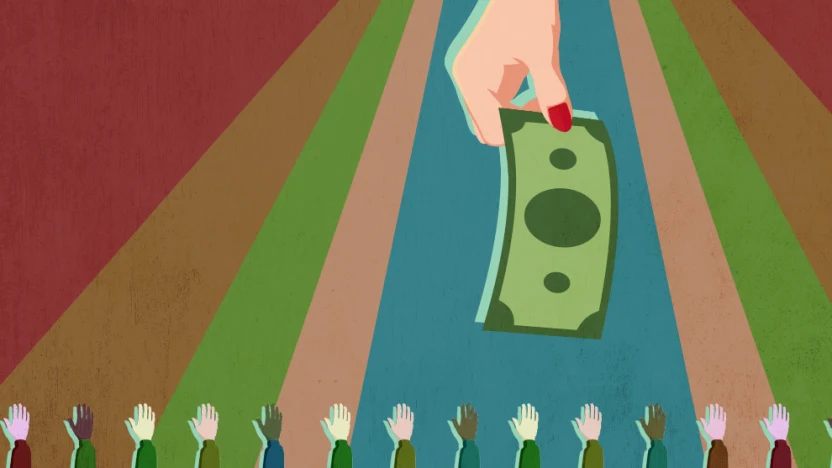
As we mentioned earlier, plutocracy is not simply about how the rich pump money directly into national politics. The fact remains that the way they finance and spend money for many other socio-political-economic activities can also lead to the development of plutocratic polities.
This is what socio-political scientists call “plutocratic philanthropy” [6].
In this kind of system, charity organizations only act nominally to solve social problems and are, in truth, governed by separate private trust councils. They receive specific tax incentives but are not subject to any democratic constraint.
Some will argue that the tycoons use their money to bring social assistance and that this is an overall good that should not be questioned. However, donating money in the name of goodwill does not mean that the goals or the outcomes of that action will be beneficial to society as a whole.
An example of such a venture would be the free seeds given by charitable organizations to farmers which they thought could give better production. However, if this program eventually failed because the market did not favor new varieties over the old ones, then the farmers who joined this program would not profit as expected, which led to financial-economic consequences for their families.
The sad reality is that these charity organizations, with enormous resources but nothing to lose, will immediately jump to other projects. And yet, these farmers do not have the same chance; they cannot easily go back to planting their prior harvest since they are already suffering from a net loss of income.
This is just one extreme example of the damage that can be done by the philanthropic projects controlled by the super-rich.
Additionally, as numerous studies have shown, billions of dollars deliberately poured into private philanthropic programs can shape political discourse, manipulate academic research, and even shape public policy. [7]
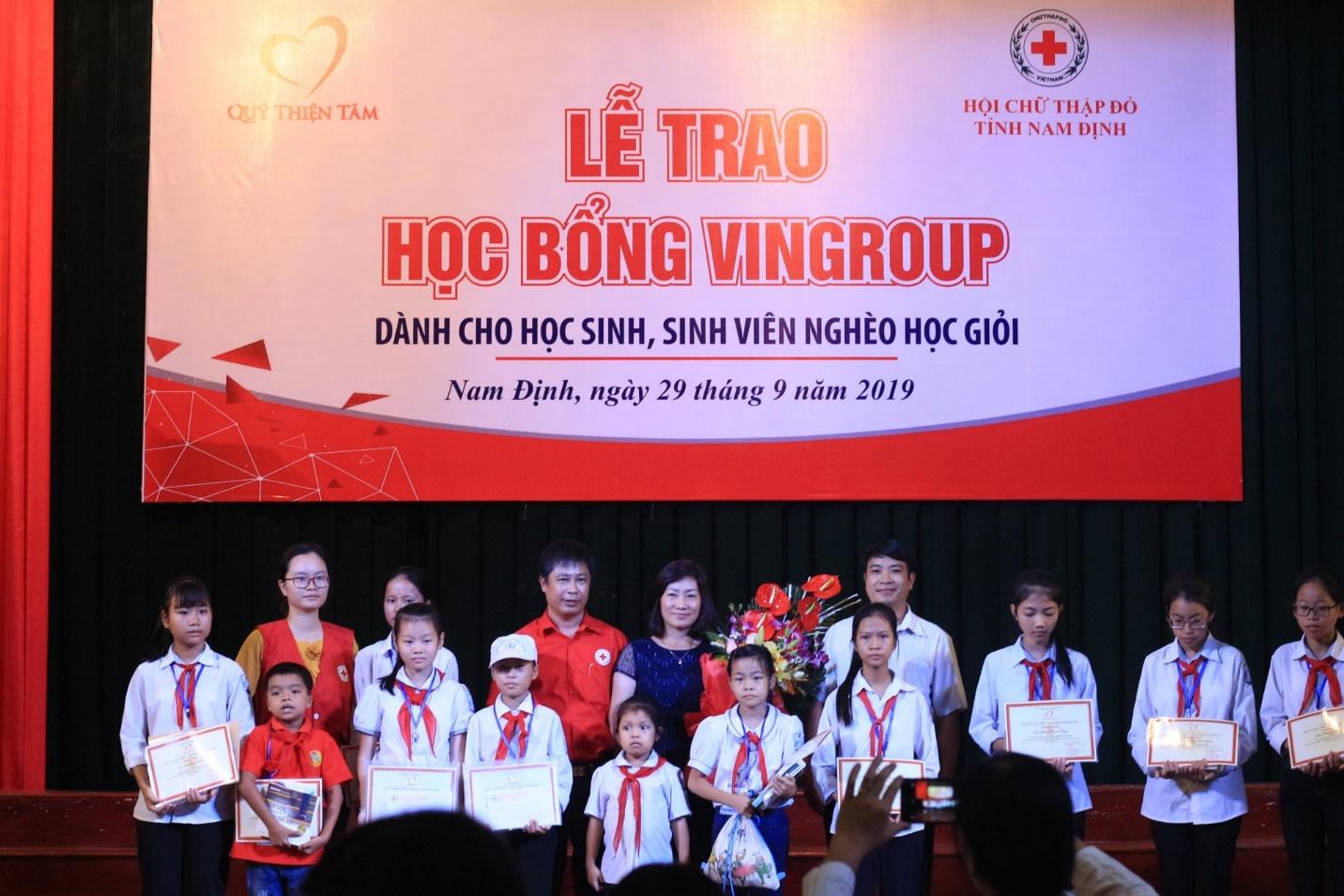
We need only look at the story of Mark Zuckerberg giving US$100 million to the Newark Public Schools in 2010, [8] or at the long-term intervention of billionaires such as Eli Broad, Bill, and Melinda Gates. Thus, it appears that the giant expenditures under the charity fund of Vingroup may indeed open the door to plutocratic philanthropy in Vietnam.
References
1. Tuổi Trẻ Online. (2022, January 13). Nhiều nhà khoa học lớn sẽ tham gia Tuần lễ trao giải VinFuture. https://tuoitre.vn/nhieu-nha-khoa-hoc-lon-se-tham-gia-tuan-le-trao-giai-vinfuture-20220113164215269.htm
2. VnExpress. (2022, January 17). Tỷ phú Phạm Nhật Vượng: ‘Làm việc khó mới thú vị.’ Vnexpress.net. https://vnexpress.net/ty-phu-pham-nhat-vuong-lam-viec-kho-moi-thu-vi-4417105.html
3. Pierson, P. (2017). American hybrid: Donald Trump and the strange merger of populism and plutocracy: American hybrid. The British Journal of Sociology, 68, S105-S119. https://doi.org/10.1111/1468-4446.12323 Xem thêm tại The Diplomat. (2020, September 28). Can America Escape Plutocracy? https://thediplomat.com/2020/09/can-america-escape-plutocracy/ và Kenworthy, L. (2022). Economic inequality and plutocracy. Contemporary Sociology (Washington), 51(1), 6-15. https://doi.org/10.1177/00943061211062959
4. Bartels, L. M. (2008). Unequal democracy: The political economy of the new gilded age. New York: Russell Sage Foundation.
5. Vincente Nguyen. (2022, January 12). Tư bản thân hữu và mối liên hệ với thể chế của Việt Nam. Luật Khoa Tạp Chí. https://www.luatkhoa.org/2022/01/tu-ban-than-huu-va-moi-lien-he-voi-the-che-cua-viet-nam/
6. Barkan, J. (2016, April 28). Plutocrats at Work: How Big Philanthropy Undermines Democracy. Dissent Magazine. https://www.dissentmagazine.org/article/plutocrats-at-work-how-big-philanthropy-undermines-democracy
7. Saunders-Hastings, E. (2018). Plutocratic Philanthropy. The Journal of Politics, 80(1), 149–161. doi:10.1086/6941038. Mark Zuckerberg once “ade a $100″million investment in a major US city to help fix its schools — now the mayor says the effort “parachuted” in and failed. (2018, May 13). Business Insider Nederland. https://www.businessinsider.nl/mark-zuckerberg-schools-education-newark-mayor-ras-baraka-cory-booker-2018-5?international=true&r=US


